ABOUT
SARAJEVO STUDY TRIP
EULR SUMMER SCHOOL
BLOG
SEARCH


Expand. Exchange. Experience.
2026 Edition
 Europe Between Fracture and Renewal
For more than two decades, the European Union and Legal Reform (EULR) Summer School has brought together students, scholars, practitioners and young professionals interested in the changing legal and political landscape of Europe. Since its establishment, the Summer School has served as a space for critical discussion, interdisciplinary exchange and the development of networks that continue well beyond the duration of the programme.
The 2026 edition adopts an itinerant format that combines online activities with a later in-person workshop at SAIS Europe in Bologna. While different in structure from previous editions, the programme maintains its core mission: fostering dialogue on European integration, legal reform and the future trajectories of Europe at a moment of significant geopolitical, institutional and societal transformation.
This year's programme invites participants to reflect on contemporary challenges facing Europe and its neighbourhood: changing forms of integration, democratic resilience, constitutional transformation, enlargement, and competing visions of Europe's future. Through lectures and discussions with leading scholars and practitioners, participants will engage with questions that increasingly shape the legal and political agenda of Europe.
The 2026 edition also marks an important transitional moment for the EULR Summer School and lays the foundation for the return of a full-week, fully in-person Summer School in 2027.
ORGANIZED BY
SUPPORTED BY
 Where: Online and Bologna, Italy
Online Lectures: June 30 and July 2, 2026
In-person Workshop: Autumn 2026 in Bologna
Application deadline: May 3rd
To whom: final-year undergraduate students and graduate students in Law and Political Science, as well as young professionals and scholars.
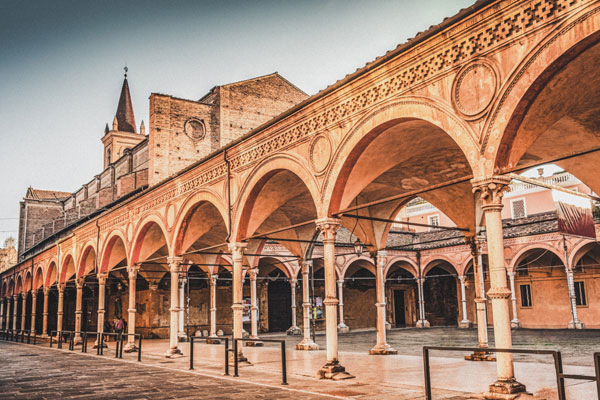
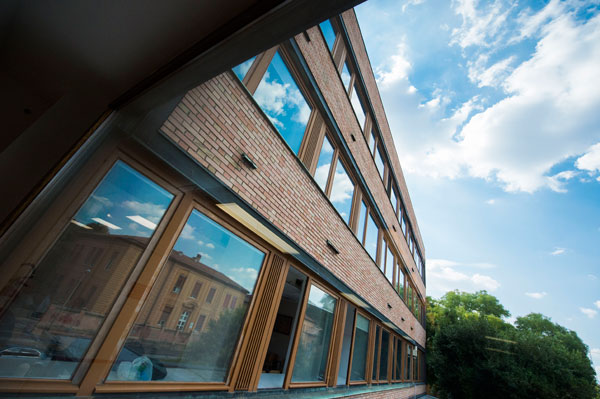 Bologna is a historic city in northern Italy, renowned for its rich cultural heritage, vibrant academic life, and distinctive red-brick architecture. The city is home to the University of Bologna, the oldest university in the Western world, and is celebrated for its culinary tradition and terracotta-colored buildings. Its history dates to Etruscan and Roman times, and the city is distinguished by its medieval towers, extensive porticoes, and grand piazzas. Among its most notable monuments are Piazza Maggiore, the Basilica of San Petronio, the Two Towers, and the Archiginnasio. Bologna is easily accessible by high-speed train and is served by Guglielmo Marconi International Airport.
 Am I eligible to apply?
The summer school is open to final-year undergraduate students and graduate students in Law and Political Science, as well as to young professionals and scholars. Our ideal candidate will have a solid background knowledge in European Law and an understanding of the mechanisms of EU enlargement.
What is the application process?
To apply for the Summer School, please fill out the application form. The CCSDD does not accept any additional materials such as CVs, recommendation letters etc.
What are the costs of participation?
The full cost of tuition, accommodation in double room and food during the time of the summer school is 1000,00 EUR. We do, however, offer a number of partial and full scholarships. While selection of applicants will be based on the academic merit of the applications, those willing to bear the participation costs fully or partially will be preferred in case of equally strong applications.
What does the program of the summer school look like?
The primary activities consist of lectures and roundtable discussions. Every year we also organize a boat trip and a visit to cultural sites. To get a better idea of what to expect, you can visit our Facebook page.
When will I be notified about the selection results?
You will be notified about the selection results by May 15th.
The vision of the EU & Legal Reform Summer School is to create a dynamic network of scholars and practitioners who will work to enact critical reforms as the EU expands. For the past 22 years we have worked towards this goal in two ways:
Here at the CCSDD, we believe that for true integration into the European Union to take place, European law needs to be fully incorporated into every aspect of domestic legislation. In order to harmonize the current South-Eastern European legal systems with those of EU countries, as well as cultivate groundbreaking legal thinking, it is essential to develop, train, and disseminate innovative teaching methods to young academics. In so doing, we can create a new generation of receptive and open-minded lawyers and political scientists who will play a critical role in the process of reform.